[The following piece was aimed at our current challenge in the US, but it applies to anything, anything, in your life that is a “challenge”.
We have a challenge:
This incredible protest CAN instigate true change.
And, now, it will not come to fruition unless WE, not just politicians, create it.
“You never change things by fighting the existing reality. To change something, build a new model that makes the existing model obsolete.”
Buckminster Fuller
We need to “see” the new reality and to do that we need to build a new model - one that makes the existing model obsolete. (And probably too, too small, and/or too, too gradual.)
Showing posts with label world. Show all posts
Showing posts with label world. Show all posts
Tuesday, June 9, 2020


Monday, May 11, 2020
This will save lives if it gets anti-vaxxers to actually look at the facts.
As the study cited points out, "reported rates of vaccine refusal
or delay are increasing," which is a MAJOR CONCERN
FOR PUBLIC HEALTH MORE BROADLY.”
or delay are increasing," which is a MAJOR CONCERN
FOR PUBLIC HEALTH MORE BROADLY.”
Anti-vaxxers will be enabling more deaths than normal because
of the overload likely with coronavirus and the flu season
happening at the same time and overloading the medical
systems, which then creates more
people dying. (An “anti-vaxxer” is a person who wants to
do what is right and good but is unduly fearful of vaccines,
apparently ignoring the overwhelming evidence for an untested,
unquestioned belief he/she has.)
of the overload likely with coronavirus and the flu season
happening at the same time and overloading the medical
systems, which then creates more
people dying. (An “anti-vaxxer” is a person who wants to
do what is right and good but is unduly fearful of vaccines,
apparently ignoring the overwhelming evidence for an untested,
unquestioned belief he/she has.)
IF YOU PASS THIS ON, YOU COULD SAVE A LIFE, as converting even one anti-vaxxer could save another
life or lives. (Published in The Verge, a liberal leaning site but
still based on science and thinking and not opinion.)
life or lives. (Published in The Verge, a liberal leaning site but
still based on science and thinking and not opinion.)
Vaccinations Have Prevented At Least 103 Million Cases...
Saturday, May 9, 2020
Crisis interview: Beyond The Pandemic - one of the best discussion you’ll ever hear
This is very, very, very well worth watching as being one of the very best thinking from some super world thinkers, from the author of the super book Sapiens to a world strategic thinker to an economist with a huge, practical heart and a good message for mankind.
Some notes:
This will be a recession, and possible worldwide depression, far greater than 2008.
We need to stop the tribalism of nation’s and “advocates” of their own narrow viewpoints.
There will be a lot more inequality (due to economics, not prejudice)
We must stop the spread of “ridiculous ideas like those about vaccinations.”
We need to be very careful about the information we hold as true.
We need to educate ourselves in what to believe and not fall victim to conspiracy theories.
We need to overcome delusion and confusion.
In 2009, this economist wrote of pandemics. He talks of waking up to hygiene and... .
This will be the worst crisis since 1929, more serious than 2008, with a -20% global economy.
We need to brace ourselves for a huge 2nd wave of the virus.
Now is the time when we need altruism and global solidarity (one of the other thinkers notes that we have no global leadership right now, though China is trying to work its way into being the global leader)
“Altruism is the only way that we will survive and get through this crisis.” (And a few other terrific quotes.)
Altruism is “rational selfishness”, when it is in our interest to have interest in other people doing well.
We have to rethink the way we live.
We need to move to be being an altruistic, empathetic society.
“The choices we make today will determing what kind of tomorrow awaits us all.” [!!!!!!!!]
=-)
And, clearly, we are, and must be, in this together...
Listen to this hour, as it will be one of the best and highest value discussions you’ll listen to this year....
Crisis Interview: Beyond The Pandemic
Some notes:
This will be a recession, and possible worldwide depression, far greater than 2008.
We need to stop the tribalism of nation’s and “advocates” of their own narrow viewpoints.
There will be a lot more inequality (due to economics, not prejudice)
We must stop the spread of “ridiculous ideas like those about vaccinations.”
We need to be very careful about the information we hold as true.
We need to educate ourselves in what to believe and not fall victim to conspiracy theories.
We need to overcome delusion and confusion.
In 2009, this economist wrote of pandemics. He talks of waking up to hygiene and... .
This will be the worst crisis since 1929, more serious than 2008, with a -20% global economy.
We need to brace ourselves for a huge 2nd wave of the virus.
Now is the time when we need altruism and global solidarity (one of the other thinkers notes that we have no global leadership right now, though China is trying to work its way into being the global leader)
“Altruism is the only way that we will survive and get through this crisis.” (And a few other terrific quotes.)
Altruism is “rational selfishness”, when it is in our interest to have interest in other people doing well.
We have to rethink the way we live.
We need to move to be being an altruistic, empathetic society.
“The choices we make today will determing what kind of tomorrow awaits us all.” [!!!!!!!!]
=-)
And, clearly, we are, and must be, in this together...
Listen to this hour, as it will be one of the best and highest value discussions you’ll listen to this year....
Crisis Interview: Beyond The Pandemic
Monday, August 26, 2019
Your life and millions of others will be transformed by the cities of the future!
There are incredible things happening to transform our cities and our lives, but many people don’t know about.
Another article updating us on this, from Peter Diamandis, who tracks all of this and the abundance it will create:
First, some illustrative excerpts for the miracles of the future, happening already and rapidly, faster than you think possible:
“Already, the City Brain has cut ambulance and commuter traveling times by half. And as reported by China’s first AI-partnered traffic policeman Zheng Yijiong, “the City Brain can detect accidents within a second” allowing police to “arrive at [any] site [within] 5 minutes” across an urban area of over 3,000 square miles.”
“As exponential technologies across energy and water burst onto the scene, self-charging cities are becoming today’s testing ground for a slew of green infrastructure pilots, promising a future of self-sufficient societies.”
The article: The Smart Cities Of The Future.
Another article updating us on this, from Peter Diamandis, who tracks all of this and the abundance it will create:
First, some illustrative excerpts for the miracles of the future, happening already and rapidly, faster than you think possible:
“Already, the City Brain has cut ambulance and commuter traveling times by half. And as reported by China’s first AI-partnered traffic policeman Zheng Yijiong, “the City Brain can detect accidents within a second” allowing police to “arrive at [any] site [within] 5 minutes” across an urban area of over 3,000 square miles.”
“As exponential technologies across energy and water burst onto the scene, self-charging cities are becoming today’s testing ground for a slew of green infrastructure pilots, promising a future of self-sufficient societies.”
The article: The Smart Cities Of The Future.
Tuesday, July 16, 2019
Saturday, June 29, 2019
The young world changers
(Written on the Mindvalley University facebook page).
Having been “officially” “adopted” as “adopted grandparents” to Kaitlin and Cassidy Murray, we (Robin and I) get to boast of our adopted grandchildren.
We were privileged to have Vishen join our table the other night, when shortly thereafter he suddenly sprang into action to create a whole new way of Kaitlin and Cassidy presenting on July 4th, where we are now looking to for it to go viral, to have a greater impact.
Kaitlin and Cassidy have been “working” in the refugee camps instead of going to college. Vishen interviewed them, recording it all on his iphone and they handled his questions with great maturity, centeredness, and clarity (at ages 20 and18!). Be sure to see this all in action on July 4th!
One of the great things about this is that they are not only helping the world but are themselves becoming masters of life - more and more able to not only be fulfilled themselves but to be able to have the power and mastery that will more greatly affect the world and all of those around them.
What could be better?!!!
Indeed, we all can learn to be masters of life if we choose to do that which it takes to become such.
(Oh, and plaudits to Gina & Todd Murray for having “produced” these world changing women!)
Tuesday, October 23, 2018
Plug into Bill Gates...for elevated thinking that we all can copy/benefit from.
I suggest that you subscribe to Gates Notes, as hanging around with Bill will elevate your brain and your mode of thinking, more towards what works better in life.
Here’s the latest from Gates Notes: Gates Plan For Climate Change.
(As I see this level of caring and commitment and effort put out by Gates and a small set of other great problem solvers, I am moved, touched,, and inspired...)
Thursday, June 21, 2018
Using “rational, factual thinking” re: marijuana legalization
Marijuana legalization has a complex and confusing set of pros and cons and facts and non-facts (“talking points”), but the consequences should be much more CAREfully thought out. From what I can see, there is little depth of thought or fact finding and lots of jumping to conclusions. And some get caught up in the emotion and even set up defenses and attacks.
There is no denying the facts that there will be some damage, so it might be behooving for each person to decide if the damage is too great or if it is justified...
See Marijuana Legalization - Should We At Least Think About This With Care For Our Fellow Man
Monday, November 27, 2017
Climate change...hyperbole vs. thinking...and the road to the solution
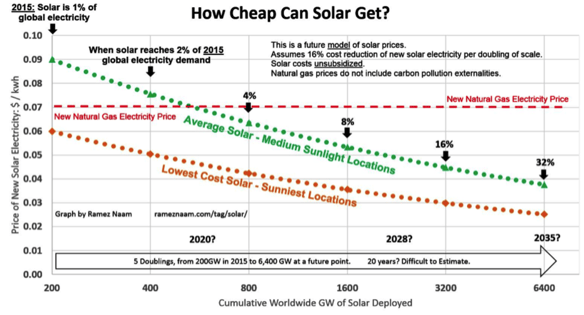
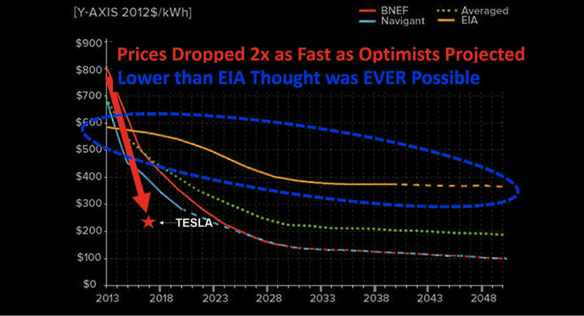
Government and regulation will not solve the problem, though it might ameliorate it a bit. Only technological advances will - and they must be such that they are cheaper than the fossil fuels, so that normal “people” incentives (to spend less) would automatically work! (Yes, we do want fairy tale “goodness” of mankind to be true, however it, unfortunately, is largely not true, as we all need to survive and to meet other needs...dang! A realistic assessment of human behavior is always needed to assure better solutions... Elon Musk and a carbon tax as the best incentive...)
And the hysteria and apocalyptic predictions will not do much good.
We will, in fact, solve the problems, as we always have...but by cool headed thinking and actual problem solving, where we define the problem and solve it instead of taking up our time stuck in the problem and the “ain’t it awful” conversation.
Yes, it does need to be solved, with superpriority, but it will only be solved by objective, fact-based thinking, not by warring, blaming, arguing, or any of the other all too human weapons we inappropriately apply.
Bill Gates and others formed an agreement and a pool of funds (the Breakthrough Energy Coalition) to fund technological advances, off to the side while attending the Paris Climate Agreement forum of countries. The agreement was not sufficient, though it was nice, nor was it economical, as the economic tradeoffs for citizens and some tradeoff in lost lives would occur. (See Bjorn Lomborg and the Copenhagen Consensus, using a nonpartisan scientific thinking approach without politics. Read Bill Gates Notes about this, linking to two videos by Lomborg.)
What should we individuals do here?
Of course, do as much as we can on conserving energy and not contributing to pollution, etc. But the key thing is to approach this in a coolheaded manner, such as helping to fund the research that would speed up the technological advances. Peter Diamandis is one of the leading “cool heads”, and what follows is a copy of his latest email...
___________
Here’s Peter Diamandis email on it:
And the hysteria and apocalyptic predictions will not do much good.
We will, in fact, solve the problems, as we always have...but by cool headed thinking and actual problem solving, where we define the problem and solve it instead of taking up our time stuck in the problem and the “ain’t it awful” conversation.
Yes, it does need to be solved, with superpriority, but it will only be solved by objective, fact-based thinking, not by warring, blaming, arguing, or any of the other all too human weapons we inappropriately apply.
Bill Gates and others formed an agreement and a pool of funds (the Breakthrough Energy Coalition) to fund technological advances, off to the side while attending the Paris Climate Agreement forum of countries. The agreement was not sufficient, though it was nice, nor was it economical, as the economic tradeoffs for citizens and some tradeoff in lost lives would occur. (See Bjorn Lomborg and the Copenhagen Consensus, using a nonpartisan scientific thinking approach without politics. Read Bill Gates Notes about this, linking to two videos by Lomborg.)
What should we individuals do here?
Of course, do as much as we can on conserving energy and not contributing to pollution, etc. But the key thing is to approach this in a coolheaded manner, such as helping to fund the research that would speed up the technological advances. Peter Diamandis is one of the leading “cool heads”, and what follows is a copy of his latest email...
___________
Here’s Peter Diamandis email on it:
|
The preferred location for such a sunshade is near the Earth-Sun inner Lagrange point (L1) in an orbit with the same 1-year period as the Earth, and in-line with the Sun at a distance ≥ 1,500,000 kilometers from Earth.
While researching the idea, I found three well documented write-ups:
- In 1989, James Early (from the Lawrence Livermore National Laboratory) proposed putting a giant, 2000 km-wide glass deflector at L1.
- A 1992 NASA report suggested lifting 55,000 “solar sails” into orbit at L1, each with an area of 100 km2, blocking about 1 percent of sunlight.
- In 2007, Roger Angel (an astronomer from the University of Arizona), suggested creating a “cloud” of tiny sunshades at L1, each weighing about 1.2g and measuring 60cm in diameter.
All of these proposals have their respective limitations, whether it be cost, technical feasibility, and so on.
Roger Angel’s solution, which proposed millions of micro-shades rather than one large, expensive structure, has various pros and cons. It’s estimated that his concept could be developed and deployed in 25 years at a cost of a few trillion dollars, <0 .5="" gdp="" of="" over="" percent="" s="" span="" style="color: inherit; font-size: inherit;" that="" the="" time.="" world="">
This is just one example of many geoscale engineering projects worth exploring.
Others (which I don’t like as much, because they may not be as easily reversible and controllable) include documented ideas like seeding our oceans with iron to increase the growth of plankton, or deliberately injecting the stratosphere with sulphur compounds to increase the Earth's reflectivity.
Clearly, I can’t put forth this option without acknowledging that we can’t fully know the secondary effects of these efforts. As Jim Haywood, professor of Atmospheric Science at University of Exeter said in an interview, “…there’s a healthy fear surrounding a technique that, without being hyperbolic, would aim to hack the planet’s climate and block out the sun.”
Final Thoughts
We can either wait for climate change to continue to decimate elements of our society, or we can begin focusing aggressively on solutions.
Given our access to exponential technologies, I am far more hopeful about our ability to address the climate crisis today, rather than 50, or even 20, years ago.
We can fix the problem — we just need to focus our intellect, resources and technology, and focus it fast.
Over the next decade, as climate change becomes more devastating and visible, great thinkers and entrepreneurs will emerge with even more surprising solutions to help tackle this grand challenge.
As I have often said, the world’s biggest problems are the world’s biggest business opportunities.
Join Me
1. A360 Executive Mastermind: This is the sort of conversation I explore at my Executive Mastermind group called Abundance 360. The program is highly selective, for 360 abundance and exponentially minded CEOs (running $10M to $10B companies). If you’d like to be considered, apply here.
Share this with your friends, especially if they are interested in any of the areas outlined above.
2. Abundance-Digital Online Community: I’ve also created a Digital/Online community of bold, abundance-minded entrepreneurs called Abundance-Digital.
Abundance-Digital is my ‘onramp’ for exponential entrepreneurs – those who want to get involved and play at a higher level. Click here to learn more
Friday, April 7, 2017
Millennial (born 1984 or after) - Depressed, lost, but...
(Click on the title of this post to read the entire post.)
Perhaps you can help a millennial connect with good sources of discussion with other millennials to help them cope and learn the skills that would turn their lives around. You might wish to pass this piece onto a millennial to see if it will be of interest and use to them.
Simon Sinek brilliantly laid out the dilemma and the solution in this video: Simon Sinek On Millenials, which, I think, all people should watch regardless of age, as it is quite meaningful and insightful. He nails what is going on with the Millenial and the problems that need to be resolved.
Some points:
The millennial was, in most cases, dealt a bad hand, and are where they are through no fault of their own. The parents tried everything they could think of, but ultimately they taught the millennials some of the wrong things (such as entitlement, getting credit where none is earned, etc.).
They are stuck in short term Facebook, et.al. dependencies and addictions and ways of behaving that push out of the way the learning of the skills that will cause them to be able to cope effectively with building a career, social relationships, and a life built on long term valuables.
They are not experiencing job fulfillment, close relationships. Nor learning the skills of cooperation.
Yes, the corporations "should" realize that they need to teach the millennials what it takes, but I wouldn't hold my breath on that one, as they are unlikely to be able to see that.
It seems that, as with many problems related to any subculture of civilization, the Millenials must rely on themselves, as they are the ones most interested in getting better results.
I received a nice note from "Kolyanne" on the usefulness of my Self Esteem And Confidence, Resources page. She also shared, on her "Pinch Of Attitude" blog, a related article Always Believe In Yourself And Learn Why Most People Are Insecure. In that she included the Simon Sinek video where Simon Sinek simply, and brilliantly, "nails it!" Even if you are not a millenial, I recommend that you watch the Simon Sinek On Millenials video - AND then pass this onto a Millenial!
________
To share this piece, click on the small white envelope below...
Perhaps you can help a millennial connect with good sources of discussion with other millennials to help them cope and learn the skills that would turn their lives around. You might wish to pass this piece onto a millennial to see if it will be of interest and use to them.
Simon Sinek brilliantly laid out the dilemma and the solution in this video: Simon Sinek On Millenials, which, I think, all people should watch regardless of age, as it is quite meaningful and insightful. He nails what is going on with the Millenial and the problems that need to be resolved.
Some points:
The millennial was, in most cases, dealt a bad hand, and are where they are through no fault of their own. The parents tried everything they could think of, but ultimately they taught the millennials some of the wrong things (such as entitlement, getting credit where none is earned, etc.).
They are stuck in short term Facebook, et.al. dependencies and addictions and ways of behaving that push out of the way the learning of the skills that will cause them to be able to cope effectively with building a career, social relationships, and a life built on long term valuables.
They are not experiencing job fulfillment, close relationships. Nor learning the skills of cooperation.
Yes, the corporations "should" realize that they need to teach the millennials what it takes, but I wouldn't hold my breath on that one, as they are unlikely to be able to see that.
It seems that, as with many problems related to any subculture of civilization, the Millenials must rely on themselves, as they are the ones most interested in getting better results.
I received a nice note from "Kolyanne" on the usefulness of my Self Esteem And Confidence, Resources page. She also shared, on her "Pinch Of Attitude" blog, a related article Always Believe In Yourself And Learn Why Most People Are Insecure. In that she included the Simon Sinek video where Simon Sinek simply, and brilliantly, "nails it!" Even if you are not a millenial, I recommend that you watch the Simon Sinek On Millenials video - AND then pass this onto a Millenial!
________
To share this piece, click on the small white envelope below...
Tuesday, February 28, 2017
The most important cause of all of life, happiness, and the world being a better place. Who should we blame?
(Click on the title of this post to read the entire post.
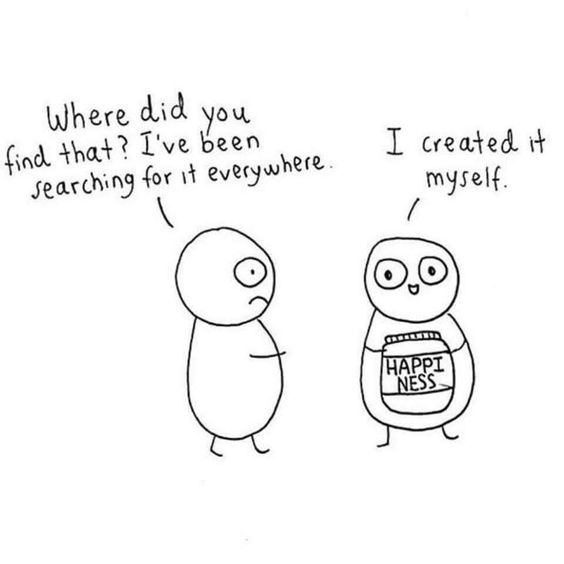
I dare not address specific sensitive issues for people or in politics, but this illustrates what is going on in our current personal world and the world out there. See if you can recognize what is happening and see if that realization will make a difference. See the drawing and then link into at least 3 minutes of the linked video.
Where is the "power" for life?
Lewis Howe asked a related question of Tony Robbins in his free podcast and the answer is in this video to watch (it is cued up at the right place, so you only need watch it for a few minutes), the link to it: it was a really interesting, powerful response.
Yes, the overall interview appears to be about one area of life, but it, indeed, is not.
Think about it!
Realize that greatness is not just about business, though the principles are the same and actually are verified with seeable results, nor just about world affairs and politics - it is about the human being, his/her happiness, and his/her fulfillment of the potential of life. And it is about actually solving problems, facing facts, and doing what works, instead of....
All that matters in life is results, not rhetoric or doing what doesn't work for results. The results I speak of can only be in the realm of benefitting human beings. The only true ethic lies in doing the greatest total good for the people affected, without doing senseless harm to any one individual. Being right (and making others wrong) has no value in and of itself or to the world - and it often creates damage. Look around you and see what it is doing to people's lives and the world...
You might wish to read the immediate prior post: Making opinions without doing the work required!
Please forward this to anyone interested in furthering the well-being of humanity. [Click on the envelope below this piece and send it.]
The copy of his email:
Link to his site: lewishowes.com Realize that greatness is not just about business, though the principles are the same and actually are verified with seeable results, nor just about world affairs and politics - it is about the human being, his/her happiness, and his/her fulfillment of the potential of life.
I dare not address specific sensitive issues for people or in politics, but this illustrates what is going on in our current personal world and the world out there. See if you can recognize what is happening and see if that realization will make a difference. See the drawing and then link into at least 3 minutes of the linked video.
Where is the "power" for life?
|
Yes, the overall interview appears to be about one area of life, but it, indeed, is not.
Think about it!
__________________
Realize that greatness is not just about business, though the principles are the same and actually are verified with seeable results, nor just about world affairs and politics - it is about the human being, his/her happiness, and his/her fulfillment of the potential of life. And it is about actually solving problems, facing facts, and doing what works, instead of....
All that matters in life is results, not rhetoric or doing what doesn't work for results. The results I speak of can only be in the realm of benefitting human beings. The only true ethic lies in doing the greatest total good for the people affected, without doing senseless harm to any one individual. Being right (and making others wrong) has no value in and of itself or to the world - and it often creates damage. Look around you and see what it is doing to people's lives and the world...
You might wish to read the immediate prior post: Making opinions without doing the work required!
Please forward this to anyone interested in furthering the well-being of humanity. [Click on the envelope below this piece and send it.]
__________________
The copy of his email:
|
Link to his site: lewishowes.com Realize that greatness is not just about business, though the principles are the same and actually are verified with seeable results, nor just about world affairs and politics - it is about the human being, his/her happiness, and his/her fulfillment of the potential of life.
Wednesday, December 2, 2015
Deep accurate thinking vs. jumping right to hope
(If you received this by email, click on the title to see the full posting.)
For those who really do want to benefit the world in some way, their contribution will be multiplied to be much greater if they employ "deep thinking in reality, with full facts, and full reasoning." That will be a great gift to others for those who so choose it.
________________________
We are so easily drawn into simplified thinking and hope - and then we become ardent believers, without having really looked deeply into the side effects and reality of our beliefs. (Read, as one of the most useful books to read, The Believing Brain, by Michael Shermer.)
The appeal of "good things" like socialism is that it will provide fairness and plenty for all people. Who could be against it - it's humanitarian, it's wonderful, greed will end forever, and we'll all be happy.
And who wants to be the grinch who stole hope?
Those who advocate looking deeper, using facts and seeing what actually happens and how human incentives actually work, are doing what is right, yet they can be vilified as asking too many questions, not being nice enough to buy into the coolade and the hallelujah, and being cynical.
The true hope for mankind lies in those who will stand for truth and for what works, for they will create a future where life is fulfilling and not absorbed into the easy way, into non-thinking, being more overweight, sucked into lethargy and technological traps, and a society that is entitled and going nowhere - that is the trend, yet few seem to see it, as it is clearly evident if we look deeper.
Here's a lesson in reality and the need for considering human motivation:
From Farnam Street blog:
Scale in Social Science
From there, Hardin goes on to point out that while physical science integrated scale long ago, social science has been quick to ignore its dictates.What works at a small scale (say, a Utopian community), loses its effectiveness as it scales. Everything has a breakpoint.
The reason communism or utopianism can work at small scale is because of the tight knit nature of a small group. Think of your family dinner table: Do you need to trade chits to decide who gets to eat how much, or do you need some grand overseer to dole out the potatoes? No. You all simply take what you need for the meal, and make sure everyone has enough. Think of the shameful admonitions if you over-eat and leave another family member hungry.
The problem is that the concept doesn’t scale. Let’s run an example.
‘Lost’ as an Economics Lesson
Four people in a small boat land on a deserted island, and decide to split the labor and duties needed to survive. Bill does the hunting, Mary builds the shelter, Steve cleans the clothes, and Susan takes care of the fire. They all share in each other’s labors: Mary gets to eat what Bill killed and Bill gets to sleep in the shelter built by Mary. By and large, this is a workable system. To each according to his need, from each according to his ability – a concept we recognize as Marxism.If Bill does not go hunting one afternoon, all four of them go hungry. Not only that, but Mary, Susan and Steve won’t be happy about that outcome. The hunger and shame placed on Bill will, generally, get him back on task the following day. And what if Susan decides to eat more than her fair share one night? The other three would not look kindly upon that, and Susan is likely to have to pull back on her eating.
There is no need for a management consultant to use motivational tactics to push Bill or punish Susan – the community works fine without it. And the four of them don’t need to use any sophisticated methods of trade either: Bill doesn’t need to sell his food to Susan in exchange for a night beside the fire. Such a system would be extremely inefficient among four people bound by tragedy and circumstance. And so the islanders live in relative peace.
After a few months, a cruise liner crashes nearby and four hundred people swarm on to the island. The original four, remembering how well their system worked, start assigning tasks: 40 people on hunting duty, 30 people tending to 8 different fires, 10 people on laundry crew, and so on. Assuming things will be the same, they set up the same “shared economy” system – take what you need, give what you can. We’re all good folk here.
Within a few weeks, the islanders notice that food is short and the clothes are taking weeks to get cleaned. One by one, the new cruise-liner folks are not holding their own, and they aren’t following the rules. The logic of the cheater is simple: If we’ve got enough food for 400, what’s the problem if I take a little extra? I’m really hungry today, and tomorrow I’ll eat a little less. Besides, Steve could stand to lose a few pounds and I’m malnourished. My need is greater. (Steve might not agree.)
Seeing one bad apple take more food than he or she deserves, the other islanders get a little jealous. If he’s going to take extra, why shouldn’t I? It’s only fair, after all. In no time, in-fighting begins and the island begins to schism.
The islanders decided to solve the problem with organization and oversight. The original four islanders form a Board of Overseers, doling out the food and the work duties with strong oversight and punishment as needed. As time goes on, the laundry folks decide they are working a lot harder than anyone else, and decide they won’t clean another pair of underwear for free. They being to trade their services for an equivalent amount of food, shelter, and fire. In turn, the hunters, the fire-builders, and the architects follow their lead.
What Happened?
By necessity, a utopian communist system is replaced by a combination of socialism and market-based capitalism. The problem is that the system of communist distribution which worked for a tight-knit group of 4 people did not scale to 400. Each person, less visible to the group and less caring about others they rarely interacted with, decided in turn to cheat the system just a bit, and only when “needed.” Their cheating had a small individual effect initially, so it went unnoticed. But the follow-on effect to individual cheating is group cheating, and the utopian goal of To each according to his need, from each according to his ability had the effect of expanding everyone’s needs and shrinking their ability, aided by envy and reciprocation effects. Human nature at work.
The problem with ignoring scale in social science, in Hardin’s view, is that it doesn’t work.
In an uncrowded world like the one our ancestors enjoyed in Pioneer America, a communistic arrangement may be satisfactory. Fruit taken from common-property trees present in excess, or game animals harvested from vast wild herds, do not demonstrably diminish the resources available next year. Communizing a cost of zero hurts no one. Similarly, wastes may be thrown away into vast areas without harming other people, so long as the metabolic powers of uncrowded nature are more than sufficient to recycle the elements.
…
But the political-economic system that works well on the frontier breaks down miserably in a world as crowded as ours. Unfortunately, long after the reality has vanished, the dream of an uncrowded world endures, often romantically glorified.
…
In a trivially abstract sense, would-be modern cowboys may have a good idea, but the scale is wrong. The judgment of “good” must be tied to scale
Subscribe to:
Posts (Atom)